
Tire Types Explained: Which Tire Is Right for Your Vehicle?
Choosing tires isn’t just about size—it’s about tire type. Different tires use different rubber compounds and tread designs, which changes how they grip the road in rain, snow, ice, and hot summer pavement.
This guide breaks down the most common tire types and helps you choose the right option for your driving in Calgary.
The 5 Main Tire Types (Quick Overview)
1) Winter Tires (Best in snow/ice)
Best for: cold temps, snow, slush, ice
Why: soft cold-weather compound + aggressive siping for traction
Look for: 3PMSF symbol (Three-Peak Mountain Snowflake)
2) All-Weather Tires (Best “one set” for year-round + winter-rated)
Best for: drivers who want one set all year but still need real winter capability
Why: winter-rated compound + tread designed for four seasons
Look for: 3PMSF symbol
3) All-Season Tires (Best for 3-season driving + light winter)
Best for: spring/summer/fall, wet roads, mild winter conditions
Why: balanced ride, longer tread life
Note: most do not have 3PMSF
4) Performance / Summer Tires (Best grip on dry/wet—NOT winter)
Best for: warm weather handling and braking
Why: sticky compound + sport tread
Avoid in winter: compound stiffens in cold; traction drops fast
5) All-Terrain / Truck Tires (Best for mixed road + light off-road)
Best for: trucks/SUVs, gravel roads, job sites, camping roads
Why: tougher construction + chunkier tread
Trade-off: louder ride, can reduce fuel economy
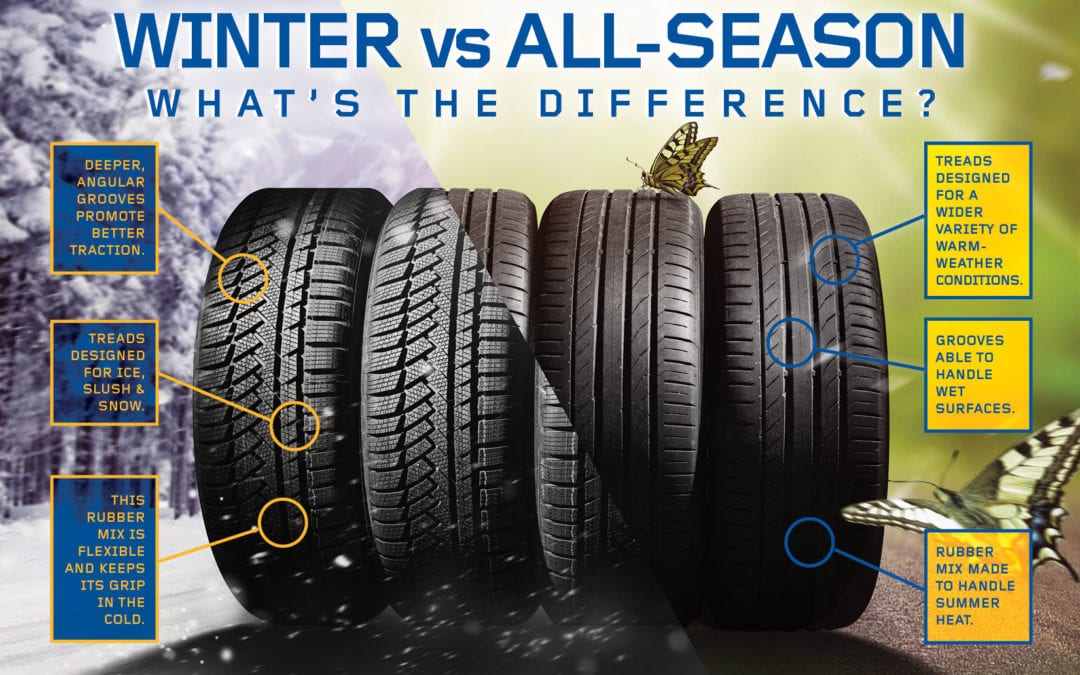
Winter vs All-Weather vs All-Season (Most Common Confusion)
Winter Tires
-
Maximum traction in snow/ice
-
Best braking and control in cold conditions
-
Usually swapped off in warmer months to reduce wear
All-Weather Tires
-
True year-round tire with winter rating (3PMSF)
-
Great option if you don’t want seasonal changeovers
-
Not always as strong as dedicated winter tires on glare ice
All-Season Tires
-
Great in warm weather and rain
-
Often the longest tread life
-
Not ideal for Calgary winter traction compared to winter/all-weather
Simple rule: If winter traction is a priority, pick Winter or All-Weather (3PMSF).
What “3PMSF” Means (And Why It Matters)
The Three-Peak Mountain Snowflake (3PMSF) marking indicates the tire meets a winter traction performance standard. In practical terms:
-
Winter tires: ✅ 3PMSF
-
All-weather tires: ✅ 3PMSF
-
Most all-season tires: ❌ (not winter-rated)
Other Tire Types You Might See
Touring Tires
Best for: comfort, quiet ride, long tread life
Great for commuters and highway driving.
Highway Terrain (H/T) Tires
Best for: trucks/SUVs mainly on pavement
Quieter than all-terrains, good tread life.
Mud Terrain (M/T) Tires
Best for: serious off-road mud and rocks
Very loud on-road, not ideal for daily city driving.
How to Choose the Right Tire Type (Fast Checklist)
Choose Winter Tires if:
-
You drive in snowstorms, early mornings, hills, or highways
-
You want the best possible winter stopping and control
Choose All-Weather Tires if:
-
You want one set year-round
-
You still want real winter-rated traction (3PMSF)
Choose All-Season Tires if:
-
You prioritize tread life and comfort
-
You do mostly city driving and rarely face heavy winter conditions
Choose Performance/Summer Tires if:
-
You want sharper handling and braking in warm months
-
You have a second set for winter
Choose All-Terrain/Truck Tires if:
-
You drive gravel/job sites, light off-road, or need tougher sidewalls
Tire Specs That Matter (Beyond Tire Type)
Load Index & Speed Rating
-
Load index: how much weight the tire can safely carry
-
Speed rating: safe speed capability + often affects handling feel
Using the correct ratings is important for safety and vehicle performance.
Tire Size Must Match
Even “close” sizes can cause issues—especially for AWD vehicles where rolling diameter matters.
Book a Tire Recommendation or Tire Quote
Not sure what tire type fits your driving and budget? We can recommend the best tire category and confirm proper size/spec for your vehicle.
Call 403-258-3030 to book.
Location: 8304 Fairmount Dr SE, Calgary, AB T2H 0Y8