
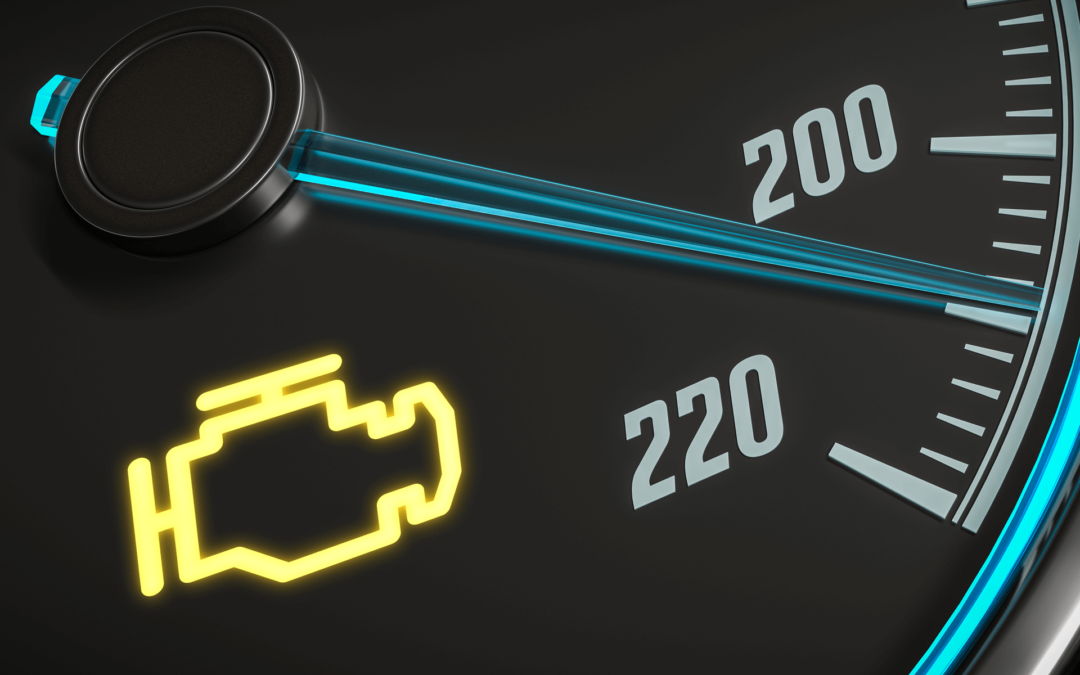
Seeing the check engine light pop up can be stressful—especially when the vehicle seems to drive “fine.” The truth is: that light can mean anything from a loose gas cap to a misfire that can damage your catalytic converter.
This guide explains what the check engine light means, when it’s safe to drive, and the most common reasons it comes on, so you know what to do next.
First: Is Your Check Engine Light Flashing or Solid?
✅ Solid check engine light
Usually means a fault was detected, but it may not be an immediate emergency. You should still book a diagnosis soon—especially if you notice changes in performance or fuel economy.
⚠️ Flashing check engine light
This often indicates an active misfire that can cause damage (especially to the catalytic converter). Reduce speed, avoid hard acceleration, and get it checked as soon as possible.
10 Common Reasons Your Check Engine Light Turns On
1) Loose or failing gas cap
A loose cap can trigger an EVAP (emissions) leak code. It’s one of the simplest causes.
What you might notice: usually nothing—maybe a fuel smell.
2) EVAP system leak (small leak code)
Even with a tight cap, hoses, purge valves, or vent valves can leak and trigger codes.
What you might notice: sometimes a fuel smell; often no symptoms.
3) Faulty oxygen sensor (O2 sensor)
O2 sensors help the engine computer adjust the fuel mixture. When they fail, fuel economy can drop and emissions increase.
What you might notice: worse gas mileage, occasional roughness.
4) Catalytic converter efficiency issues (common code: P0420)
Catalytic converters reduce emissions. Efficiency codes don’t always mean the converter is “bad”—it can also be caused by exhaust leaks, O2 sensor problems, or long-term misfires.
What you might notice: sometimes sluggish power or a sulfur smell.
5) Misfire (spark plugs, ignition coils, injectors)
Misfires are one of the most important issues to diagnose quickly.
What you might notice: shaking at idle, lack of power, flashing check engine light.
6) Vacuum leak / unmetered air
Cracked hoses, intake leaks, or PCV issues can cause lean running conditions.
What you might notice: rough idle, surging, higher idle RPM.
7) Mass Air Flow (MAF) sensor or intake air issues
The MAF helps measure incoming air. If readings are off, the engine may run rich or lean.
What you might notice: hesitation, stalling, poor fuel economy.
8) Thermostat or coolant temperature sensor problems
If the engine doesn’t reach proper operating temperature, it can run inefficiently and trigger codes.
What you might notice: poor heat, low fuel economy, temperature gauge acting unusual.
9) Transmission-related codes (yes, they can trigger the engine light)
Many vehicles use the check engine light for powertrain faults—including some transmission issues.
What you might notice: harsh shifts, delayed engagement, slipping, or no symptoms at all.
10) Battery/charging system voltage issues
Low voltage can confuse sensors and modules, sometimes triggering multiple codes.
What you might notice: slow cranking, dim lights, intermittent warnings.
Can I Keep Driving with the Check Engine Light On?
It depends. Here’s a quick rule of thumb:
Usually OK to drive briefly (but book soon) if:
-
Light is solid
-
Vehicle drives normally
-
No overheating, no shaking, no major power loss
Stop driving / get checked ASAP if:
-
Light is flashing
-
Engine is shaking, misfiring, or losing power
-
You smell fuel, burning, or see smoke
-
Temperature gauge is rising / overheating warning is on
Why a “Free Code Scan” Isn’t the Same as a Diagnosis
A code points to a system—not always the part.
Example: A code may say “O2 sensor” but the real cause could be:
-
An exhaust leak
-
A vacuum leak
-
A misfire
-
Wiring issues
A proper diagnosis saves money by fixing the cause, not guessing at parts.
What a Proper Check Engine Light Diagnosis Includes
A thorough diagnosis often includes:
-
Professional scan for codes + freeze-frame data
-
Live data review (fuel trims, misfire counts, sensor readings)
-
Visual inspection (wiring, vacuum hoses, intake/exhaust leaks)
-
Targeted testing (smoke test for EVAP leaks, ignition testing, etc.)
-
Road test (when needed) to confirm conditions and verify repair
How to Prevent the Check Engine Light from Coming Back
A few simple habits help:
-
Keep up on spark plugs and scheduled maintenance
-
Fix small drivability issues early (tiny misfires become big problems)
-
Don’t ignore overheating or coolant loss
-
Use the correct fuel and fluids for your vehicle
-
Address warning lights promptly—before they stack into multiple issues
Book a Check Engine Light Diagnostic
If your check engine light is on, we can scan it, test it properly, and recommend the right fix—without guessing.
Call Heritage AutoPro & Tire to book a Check Engine Light Diagnostic.
8304 Fairmount Dr, SE
Calgary, AB, T2H 0Y8
403-258-3030