Not all tires behave the same when temperatures drop. The biggest reason is rubber compound—the recipe of rubber and additives that determines how flexible a tire stays in cold weather. In Calgary, where winter conditions can change fast, choosing the right tire type can make a real difference in stopping distance, traction, and control.
This guide explains the difference between winter tires, all-weather tires, and all-season tires, and how rubber compound affects safety.
Why Rubber Compound Matters (More Than Most People Think)
As temperatures get colder, rubber naturally becomes stiffer. When a tire stiffens, it can’t “bite” into the road surface as well, especially on:
-
cold dry pavement
-
packed snow
-
slush
-
ice
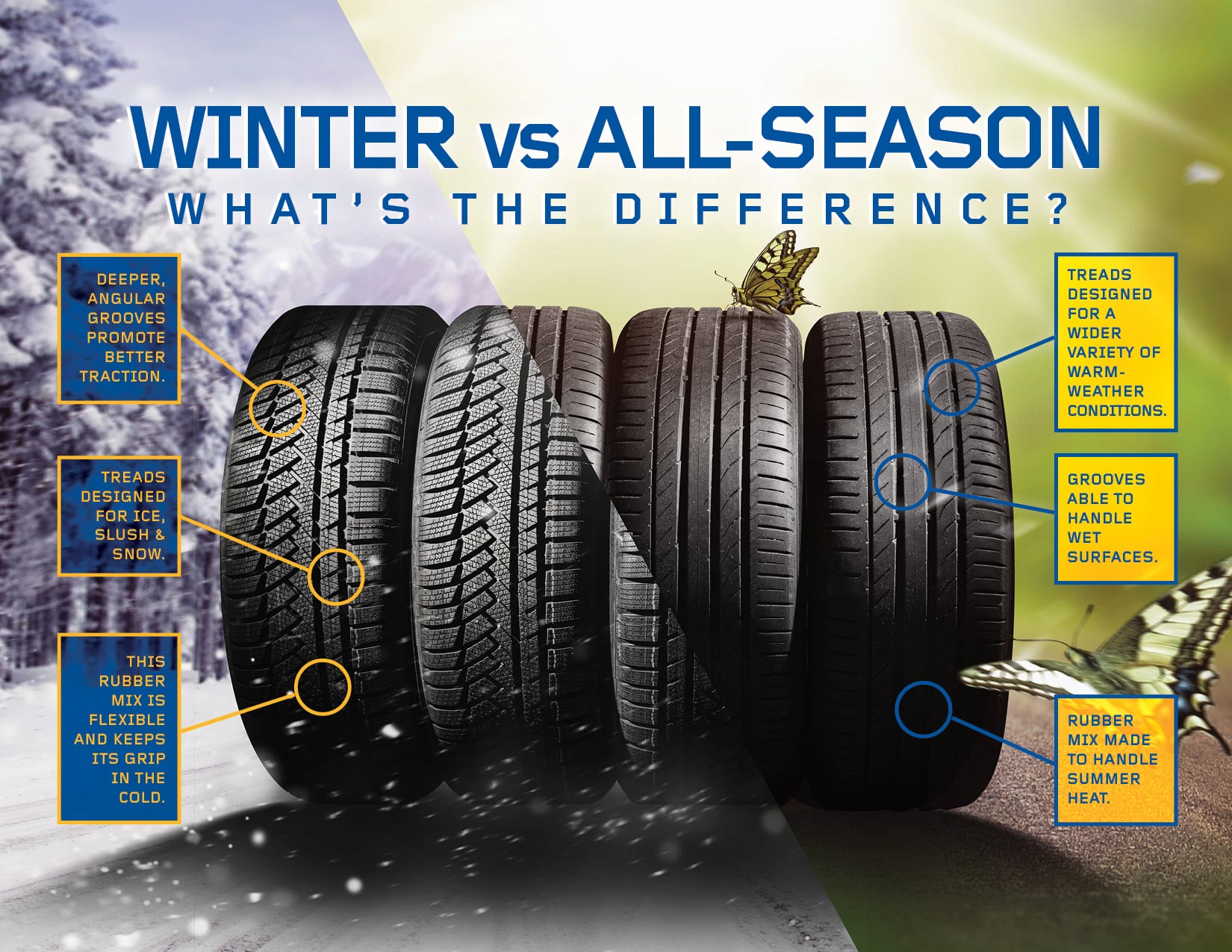
Winter-focused tires use a compound designed to stay more flexible in cold temperatures, helping the tread blocks grip and conform to the road.
The 3 Main Tire Types Explained
1) Winter Tires (Best cold-weather grip)
Winter tires are made with:
-
A soft, cold-weather rubber compound that stays flexible in low temps
-
Aggressive siping (tiny slits) for grip on snow/ice
-
Tread designed to pack and release snow (snow-on-snow traction is real)
Best for: regular winter driving, steep hills, unplowed roads, ice, and anyone who wants maximum winter control.
Trade-off: softer compound wears faster in warm weather, and can feel less crisp on hot pavement.
Look for: the 3PMSF symbol (Three-Peak Mountain Snowflake).
2) All-Weather Tires (One set year-round, winter-rated)
All-weather tires are the “in-between” option:
-
Designed to be used year-round
-
Carry the 3PMSF winter rating
-
Rubber compound stays more flexible in cold than an all-season tire
-
Better snow traction than all-season
Best for: drivers who want one set of tires and still need real winter performance for Calgary conditions.
Trade-off: not as strong as true winter tires on ice/deep snow, and may not last as long as an all-season in summer.
Important: All-weather ≠ all-season (they are different).
3) All-Season Tires (Best for mild climates, not true winter tires)
All-season tires are mainly designed for:
-
Spring, summer, and fall
-
Light winter conditions (depending on brand/tread)
Their rubber compound generally becomes stiffer in colder temperatures compared to winter/all-weather tires.
Best for: mild climates or drivers who rarely face snow/ice and do mostly city driving with well-cleared roads.
Trade-off: reduced traction and longer stopping distances in real winter conditions.
Look for: Most all-season tires do not have the 3PMSF symbol (some “all-season with 3PMSF” exist, but they’re typically marketed as all-weather).
Quick Comparison: Which Tire Is Best?
Winter Tires
✅ Best snow/ice traction
✅ Best cold braking and control
❌ Wears faster in warm temps
❌ Seasonal changeover recommended
All-Weather Tires (3PMSF)
✅ Good winter traction + year-round use
✅ Great “one set” option for Calgary
❌ Not as strong as winter tires on ice
❌ Summer performance/life can be lower than all-season
All-Season Tires
✅ Good in warm weather and rain
✅ Usually longer tread life in summer
❌ Not ideal for Calgary winter traction
❌ Compound stiffens more in cold temps
What Is the “3PMSF” Symbol and Why It Matters?
The Three-Peak Mountain Snowflake (3PMSF) symbol means the tire meets a specific winter traction performance standard. In simple terms:
-
Winter tires have it
-
All-weather tires have it
-
Most all-season tires do not
If you’re trying to drive confidently through Calgary winters, the 3PMSF mark is a strong clue you’re looking at a winter-capable tire.
Common Question: “Do I Really Need Winter Tires?”
Many drivers can “get by” on all-seasons—until they can’t. The biggest difference most people notice is:
-
shorter stopping distance on cold, snow, and ice
-
better control during turns and lane changes
-
less wheel spin when starting from a stop
If you drive early mornings, hills, highways, or during storms, winter tires are usually the safest choice.
What About Studded Tires?
Studded tires can help on glare ice, but they come with trade-offs:
-
louder road noise
-
reduced performance on dry pavement
-
road wear and restrictions in some places
Most Calgary drivers get excellent results with quality winter tires without studs.
Book a Tire Recommendation (Winter / All-Weather / All-Season)
Not sure which tire type fits your driving? We can recommend the best tire category based on:
-
your commute and routes (city vs highway)
-
how often you drive during storms
-
whether you want one set year-round
-
your budget and tread-life goals
Call 403-258-3030 to book a tire check or tire quote.
Location:
8304 Fairmount Dr SE
Calgary, AB, T2H 0Y8